

Quick answer
The Galapagos Islands best snorkeling sites include Kicker Rock for hammerhead and Galapagos sharks, Devil's Crown for reef fish and sea turtles, and Champion Islet near Floreana for sea lion interaction. Water visibility averages 10-20 meters, peaking June through November when nutrient-rich Humboldt Current upwelling brings colder temperatures (18-22°C) and higher marine activity. Most premier sites sit within Galapagos National Park boundaries and require the 200 USD conservation fee.
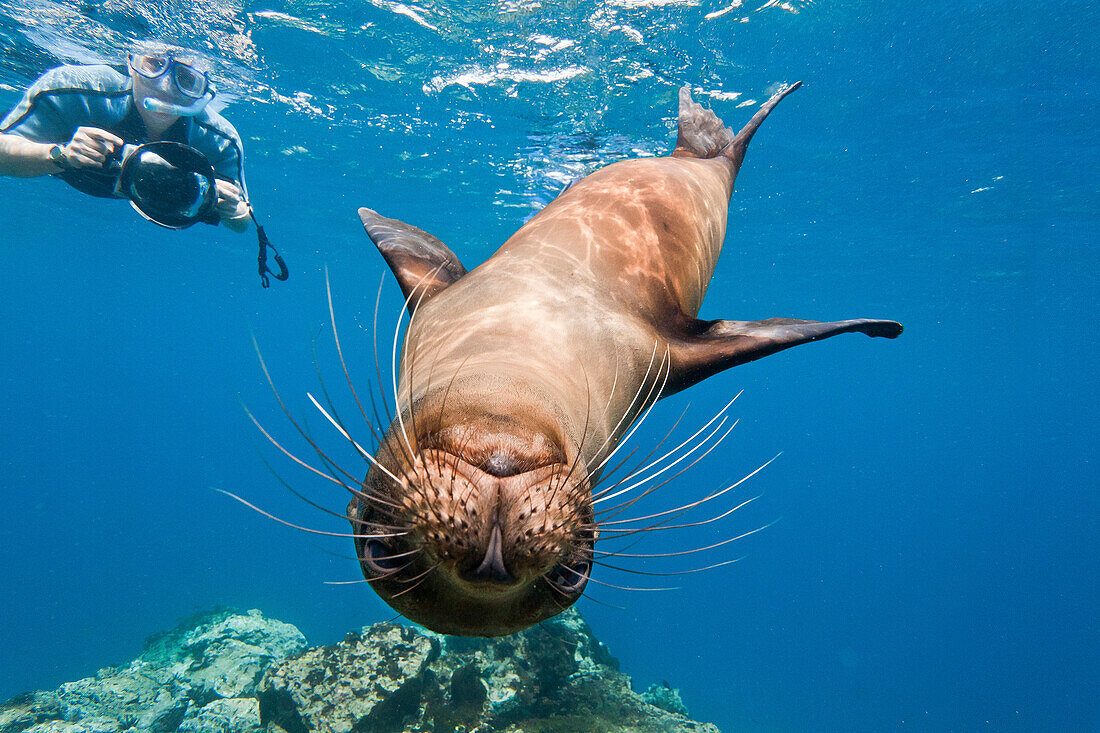
Sea lions outnumber humans at many Galapagos snorkel sites. The young ones treat divers as novelty toys, corkscrewing past masks and nipping at fins before their mothers bark them back to shore. The archipelago's position at the convergence of three ocean currents creates nutrient upwellings that support an unusual density of large pelagic species in relatively shallow water. Penguin colonies occupy equatorial lava shores. Marine iguanas graze algae beds three meters down, their clawed feet gripping basalt as they scrape. White-tip reef sharks rest in sandy channels, unbothered by approaching snorkelers. This concentration exists because cold, nutrient-dense water from the Humboldt Current meets warmer Panama and Cromwell currents, creating conditions that draw everything from filter feeders to apex predators into accessible coastal zones. Kicker Rock—a 150-meter volcanic tuff formation split by a narrow channel—offers the highest probability of encountering hammerheads, Galapagos sharks, and eagle rays. The site requires moderate current-swimming ability and typically includes two drift-snorkel passes through the channel. Devil's Crown, a partially submerged volcanic cone near Floreana, creates a natural amphitheater where green sea turtles, king angelfish, and schools of salema crowd the interior walls. Champion Islet, also off Floreana, features a collapsed caldera that forms a sheltered lagoon; sea lions use it as a nursery, and juveniles engage snorkelers in extended play sessions. Water temperature drops significantly during the Humboldt-dominant season (June through November), and many operators supply or require 3mm wetsuits. The colder months bring reduced visibility but dramatically higher wildlife activity—manta rays, whale sharks, and dolphin pods appear more frequently. Warmer, clearer conditions return December through May, when surface temperatures reach 24-27°C and visibility extends beyond 25 meters, though pelagic sightings decrease. All Galapagos National Park sites open daily from 06:00 to 17:00, with boat departures typically scheduled for early morning when wind and surface chop remain minimal.
“Sea lions treat divers as novelty toys, corkscrewing past masks and nipping at fins before their mothers bark them back to shore.”
The Best Time for Galapagos Islands Best Snorkeling Experiences
The best daily arrival window is 06:00–10:00, which provides superior water clarity and increased wildlife activity before peak sun and crowds. Seasonally, visibility fluctuates based on ocean currents and nutrient levels.
Daily Morning Window
Low crowds—
Prioritize early arrival for the clearest water and active marine life.
December to May
Moderate crowdsWarm air (24°C-30°C), calm seas
This season offers warmer water temperatures and generally calmer surface conditions for swimming.
June to November
High crowdsCooler air (19°C-24°C), choppy seas
The Humboldt Current brings nutrient-rich, cooler waters that attract larger marine species despite lower visibility.
Verdict: For the highest probability of clear water and active wildlife, plan your arrival between 06:00–10:00 during the calmer months of April or May.
Daily Opening Hours for Galapagos Islands Best Snorkeling
Galapagos National Park is open for snorkeling activities daily throughout the week. Operational hours remain consistent for all seven days.
| Monday | 06:00–17:00 | |
|---|---|---|
| Tuesday | 06:00–17:00 | |
| Wednesday | 06:00–17:00 | |
| Thursday | 06:00–17:00 | |
| Friday | 06:00–17:00 | |
| Saturday | 06:00–17:00 | |
| Sunday | 06:00–17:00 |
Top Locations for Galapagos Islands Best Snorkeling
The Galapagos archipelago offers diverse marine environments ranging from shallow volcanic coves to open-water reef systems. These specific sites are recognized for consistent wildlife sightings and geological interest.
Kicker Rock
A vertical tuff cone rising from the ocean floor, this site provides opportunities to snorkel with Galapagos sharks and eagle rays.
Swim along the rock walls to spot sharks in deep channels.
Kicker Rock shark snorkeling
Devil’s Crown
Located off Floreana Island, this submerged volcanic crater serves as a hub for sea turtles, reef fish, and playful sea lions.
Circle the exterior walls for sightings of white-tip reef sharks.
Devils Crown crater snorkeling
Las Tintoreras
A series of small islets near Isabela Island featuring calm, turquoise channels where whitetip reef sharks rest in shallow crevices.
Check the narrow crevices during low tide for resting sharks.
Las Tintoreras shark channel
North Seymour Island
This site is characterized by vibrant underwater life and frequent encounters with garden eels and schools of salema fish.
Look toward the sandy bottom to find camouflaged garden eels.
North Seymour marine life snorkeling
Concha de Perla
A protected, shallow bay accessible via a boardwalk that offers clear water for observing sea stars and juvenile fish.
Arrive early to watch sea lions swim in shallow water.
Concha de Perla bay snorkeling
Rules for Galapagos Islands Best Snorkeling Safety and Conservation
The Galapagos Marine Reserve enforces strict protocols to protect endemic species and fragile ecosystems. Following these rules preserves the archipelago's biodiversity and ensures continued access to snorkeling sites.
Do
- Maintain 2-meter distance from all marine life
- Stay with your certified guide at all times
- Use reef-safe sunscreen only
- Keep hands and fins away from coral and rocks
- Report any wildlife distress to park rangers
- Rinse all equipment in freshwater after each session
Don't
- Touch, chase, or feed any marine animals
- Remove shells, rocks, or biological material from sites
- Wear regular sunscreen containing oxybenzone or octinoxate
- Snorkel outside designated zones or without a guide
- Use flash photography underwater
- Stand on or kick coral formations
Preparation Checklist for Galapagos Islands Best Snorkeling
Essential items and documents to bring for a safe, compliant snorkeling experience in the Galapagos.
-
Bring valid passport — Required for park entry and conservation fee payment at the airport.
-
Pack reef-safe sunscreen — Chemical sunscreens damage fragile marine ecosystems; use mineral-based alternatives.
-
Carry cash for the conservation fee — The 200 USD entrance fee is collected upon arrival, often cash-only.
-
Wear a wetsuit (3mm minimum) — Water temperatures range 65–75°F; thermal protection prevents hypothermia on longer excursions.
-
Secure a GoPro or underwater camera — Rental agencies require advance booking during peak months (June–August, December–January).
-
Download offline maps of the islands — Cellular coverage is limited; GPS apps help navigate between snorkel sites and landing points.
Check availability
Frequently Asked Questions About Galapagos Islands Best Snorkeling
Everything you need to know about galapagos islands best snorkeling